Fluid-applied roof systems have become a go-to solution in modern roofing and waterproofing—and for good reason. They’re seamless, durable, and adaptable to a wide range of building conditions. While they’re often compared to traditional membrane systems, there’s a growing shift in the industry toward viewing fluid-applied systems as membranes themselves, not just surface coatings.
This perspective matters. Treating fluid-applied systems as true membranes changes how they’re designed, installed, and maintained—and ultimately leads to better long-term performance.
Fluid-applied roof systems are monolithic membranes installed in liquid form and cured into a seamless, waterproof barrier. Depending on the application, they may be made from materials such as:
Once cured, these systems act as a continuous waterproofing layer across the roof substrate, without the seams found in traditional sheet membranes.
In roofing, the terms coating and membrane aren’t interchangeable. Coatings are typically thin layers designed to protect against UV exposure, improve reflectivity, or provide limited waterproofing. Membranes, on the other hand, are intended to be the primary waterproofing system—built to handle movement, weather exposure, and long-term durability.
When fluid-applied systems are treated only as coatings, they’re often under-specified or applied too thinly. But when they’re treated as membranes, they’re designed and tested to meet—or even exceed—the performance standards of traditional systems like TPO, PVC, EPDM, or modified bitumen.
Seamless Waterproofing
Because fluid-applied membranes cure into a single, continuous layer, there are no seams—eliminating one of the most common sources of roof failure.
Excellent Adhesion and Coverage
Fluid-applied systems conform easily to penetrations, irregular surfaces, and complex roof details. Areas around drains, HVAC units, and parapets are much easier to waterproof without relying on seams or patches.
Faster, Safer Installation
These systems often require fewer installation steps and don’t rely on mechanical fasteners or heat welding. That means reduced labor time and lower installation risk.
Sustainability and Longer Roof Life
Many fluid-applied membranes are low-VOC and can be recoated at the end of their service life, extending the roof’s lifespan without a costly tear-off.
True Monolithic Performance
With no layered assemblies to separate or delaminate, fluid-applied membranes deliver consistent performance across the entire roof.
Choosing the Right Material
Not all fluid-applied systems perform the same. Material selection should be based on factors such as climate conditions, substrate compatibility, foot traffic, and exposure to ponding water.
Proper Application Thickness
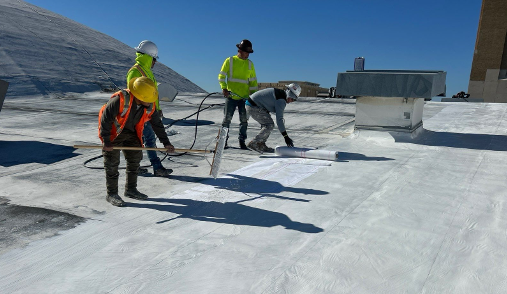
To function as a true membrane, fluid-applied systems must be installed at the correct dry film thickness (DFT). Membrane-grade systems typically range from 40 to 90 mils and are often verified during installation using wet mil gauges.
Reinforcement Where Needed
Some systems incorporate fabric reinforcement to enhance strength and durability—especially in high-stress areas like flashings, parapets, and transitions.
Testing, Ratings, and Warranties
Membrane-grade fluid systems are backed by long-term warranties (often 10–25 years) and tested to ASTM standards, including:
Treating these systems as membranes ensures additional performance criteria—such as UL listings and Factory Mutual FM 4470 Class 1 ratings—are incorporated into the design, as seen in Western Colloid’s roof systems.
Applying Membrane Systems Like Simple Coatings
Many failures occur when membrane-grade products are applied too thin or without reinforcement. Thickness and detailing matter.
Inadequate Substrate Preparation
Clean, dry, and properly primed surfaces are essential. Moisture or contaminants can compromise adhesion.
Curing Conditions
Temperature and humidity affect cure times. Cold-weather formulations or accelerators may be needed to ensure proper performance.
As building owners focus more on sustainability, energy efficiency, and asset management, fluid-applied membrane systems continue to gain momentum. Key trends include:
More municipalities and commercial property owners are also choosing fluid-applied membranes for roof restoration, recognizing their cost-effectiveness compared to full roof replacement.
Treating fluid-applied roof systems as true membranes—not just coatings—is a best practice that aligns with how these systems are designed to perform. This approach leads to stronger specifications, longer-lasting waterproofing, reduced lifecycle costs, and even potential tax benefits when used for maintenance and repairs.
As roofing technology continues to evolve, fluid-applied membranes are becoming a standard solution rather than an alternative.
When planning your next roofing project—whether it’s a restoration or a new design—approach fluid-applied systems as membranes and ensure your materials and installation methods support that goal.
As a pioneer in fluid-applied membrane technology, Western Colloid has the experience and proven systems to help you achieve your roof restoration objectives. Contact us today to learn more.