Understanding how these two trades overlap can help you protect your roof, extend its lifespan, and avoid unnecessary repairs.
Why Roofing and HVAC Must Work Together
On commercial projects, roofing contractors and HVAC contractors play very different roles—but their work overlaps in critical ways. Roofers handle penetrations, curbs, and flashing, while HVAC technicians install and service the mechanical units. If these tasks aren’t properly coordinated, the roof’s waterproof membrane can be damaged, leading to leaks or long-term deterioration.
As a building owner, being aware of this relationship puts you in a better position to prevent problems before they start.
Installation Coordination Is Critical
Installing rooftop HVAC units isn’t just an HVAC job—it’s a roofing job, too.
Rooftop HVAC systems require properly installed roof curbs and flashing to ensure the roof remains watertight. At the same time, HVAC technicians must follow roofing standards while positioning and servicing equipment. Without that coordination, the roof membrane can be punctured or compromised.
HVAC equipment is also extremely heavy. Without proper preparation, that weight can place significant stress on your roofing system. Before scheduling an HVAC installation or replacement, have a trusted roofing contractor inspect your roof to confirm it can safely support the load. This first step is crucial to avoiding preventable roof damage.
The Importance of Proper Roof Curbs
Roof curbs are one of the most effective ways to protect your roof from HVAC-related damage. When installed correctly, they lift HVAC units off the roof surface, preventing direct contact with the membrane.
This design helps:
Roof curbs are especially important when ductwork penetrates the roof. Improper installation can quickly lead to leaks inside your commercial building. Because different roofing systems respond differently to penetrations, a roofing professional should always be involved to ensure the right approach is used for your specific roof type.
Prepare for Ongoing Roof Maintenance
Rooftop HVAC units require routine service—and that means foot traffic on your roof. Over time, repeated foot traffic, tools, and equipment can damage the roofing system if it isn’t managed carefully.
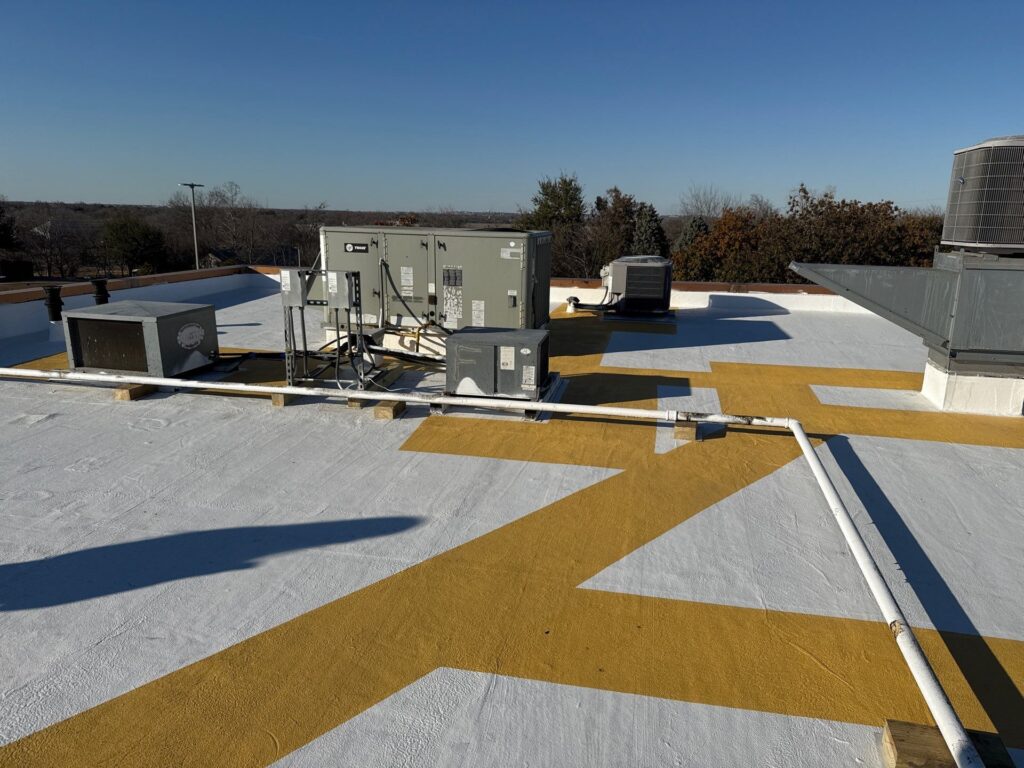
One effective solution is protecting the most frequently traveled paths on your roof, especially leading to HVAC units with a specialty formulated walkway coating such as #850 SWS Seamless Walkway coating manufactured by Western Colloid. This product helps protect the roof surface while allowing technicians to access equipment safely.
This type of product is formulated with extremely tough acrylic resins and binders, to form a long-lasting walking surface on smooth and coated roofs. #850 SWS contains an aggregate to form a textured non-slip surface with very high abrasion resistance.
#850 SWS allows the normal flow of water on the roof surface. It does not block or dam water like roof protection pads and sheets.
Even with a specialty surface in place, it can still be beneficial to have a roofing contractor involved during major HVAC service work to ensure both technician safety and roof protection.
Watch for Leaks and Condensation Issues
HVAC units can also produce condensation or develop leaks that allow water to pool on the roof. Over time, standing water can damage roofing materials and lead to interior leaks.
During regular roof inspections, pay close attention to the areas surrounding rooftop HVAC units. If you notice ponding water, excessive moisture, or signs of deterioration, contact a qualified roofing contractor and HVAC technician right away. Addressing condensation issues early can prevent larger—and more expensive—repairs later.
Planning Prevents Problems
Successful roof and HVAC integration starts with early collaboration and a clear understanding of how each trade impacts the other. With the right planning, coordination, and ongoing maintenance, building owners can avoid many common issues before they turn into serious problems.
For more information and expert resources for your next roofing project, contact the professionals at Western Colloid—your trusted partner in commercial roofing solutions.